5-star rated on Google
Concrete Bases, Kerbs and Hardstandings
Reinforced concrete bases, hardstandings and kerbs laid on firm ground to carry heavy loads.
Get Your Quote
Fill out the form below, and our specialists will get back to you swiftly.
 SafeContractorApproved, Gold status
- £10 millionPublic liability
- DBSChecked team
Concrete
Concrete work built for loading, turning and standing weight
Concrete is the right choice where a surface has to take concentrated weight: bin and skip stores, loading bays, HGV turning heads, plant standings and the pads under steel buildings. Poured to the right depth on a compacted base, with reinforcement and joints where they belong, it copes with point loads and fuel spills that would soften asphalt.
We lay concrete bases, hardstandings, footpaths and kerb lines for commercial, industrial and agricultural clients across the Midlands, and repair cracked or spalled slabs. Dropped kerbs start from £2,200, and every other job is priced after a free site survey.
Much of the work sits alongside tarmac: new kerbs to contain a car park, a concrete apron at a loading door, or a strengthened bay in a yard. Having both trades on one contract keeps the levels and joints between them right.
- Hardstandings and yard slabs
- Loading bays and aprons
- Bin and skip stores
- Kerbs and dropped kerbs
- Footpaths and ramps
- Slab and edge repairs
20+
years of surfacing experience
What's included
What our concrete work covers
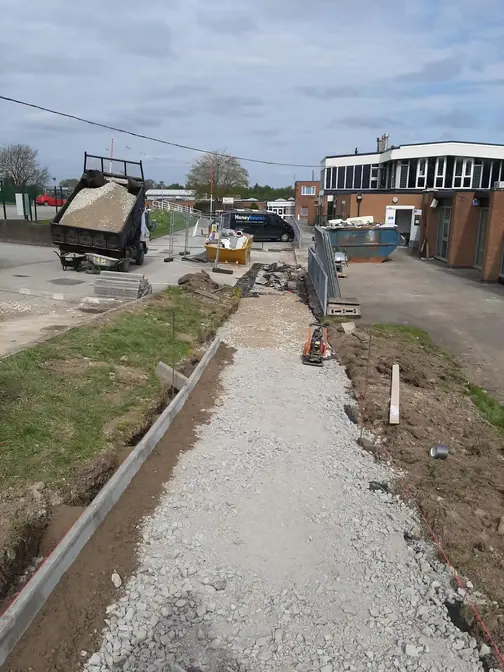
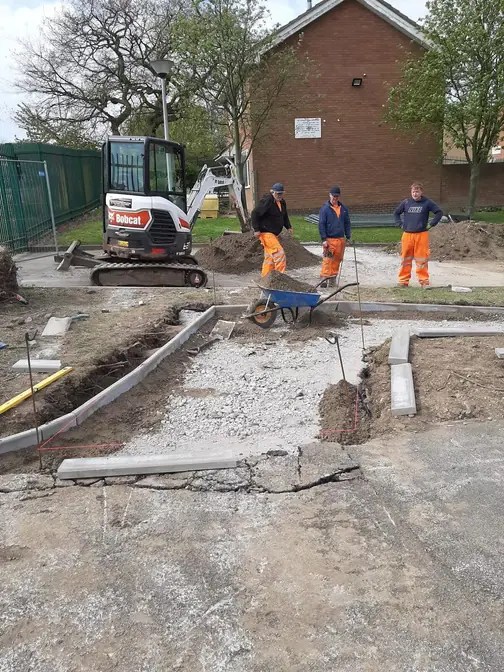
- Excavation to formation level
- Compacted stone sub-base
- Steel mesh reinforcement where loads demand it
- Formwork, pour and a tamped or brushed finish
- Expansion and contraction joints
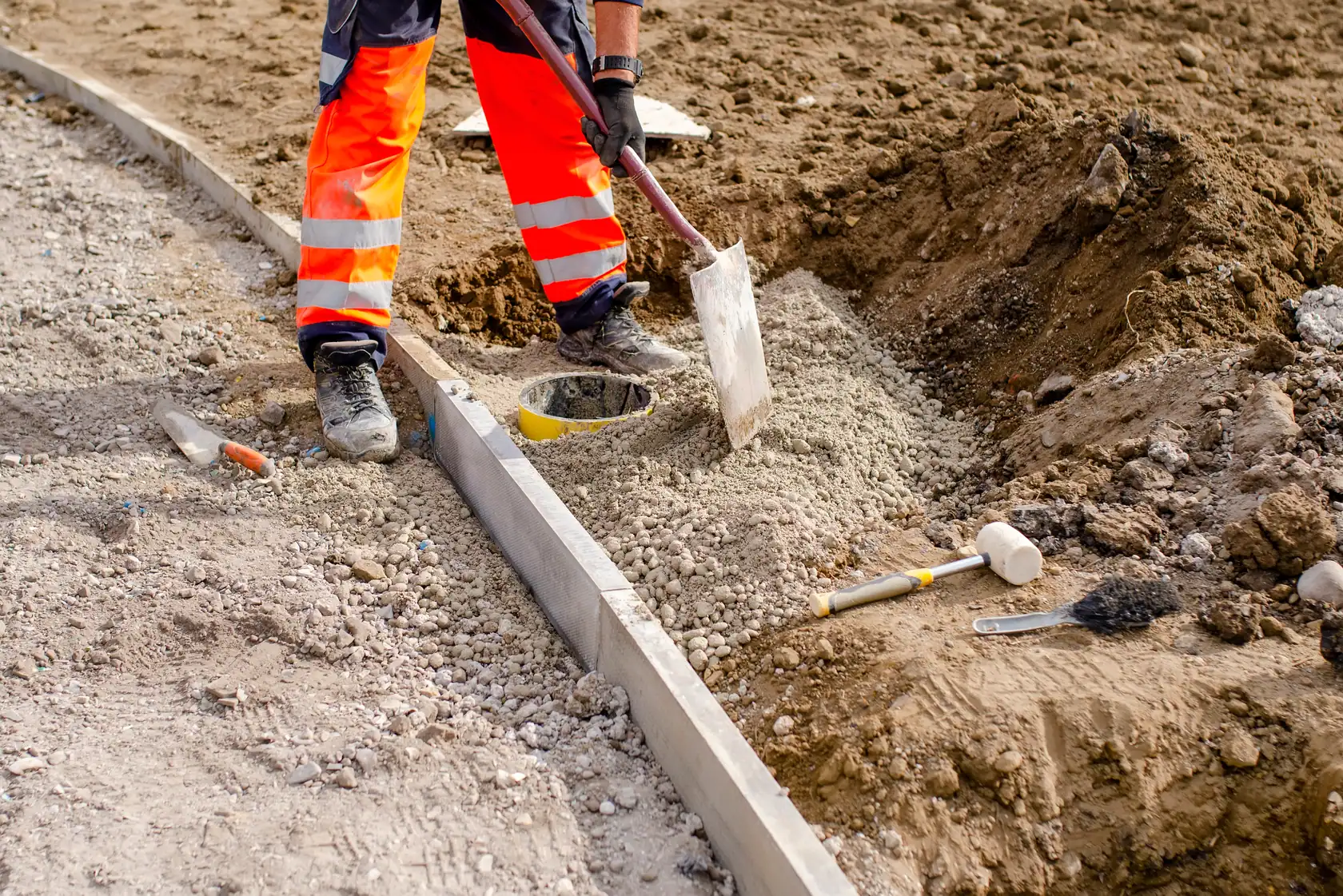
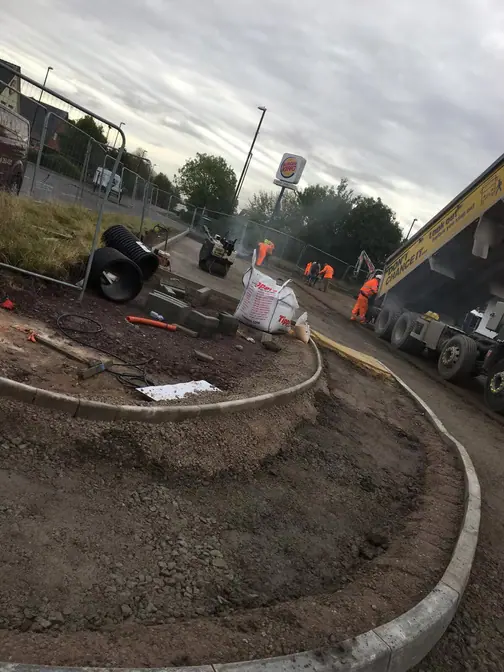
- Kerbs bedded and haunched in concrete
- Dropped kerbs for vehicle access, from £2,200
- Repairs to cracked, spalled or sunken slabs
- Ramps and level access to footpaths
Our work
Explore our concrete work
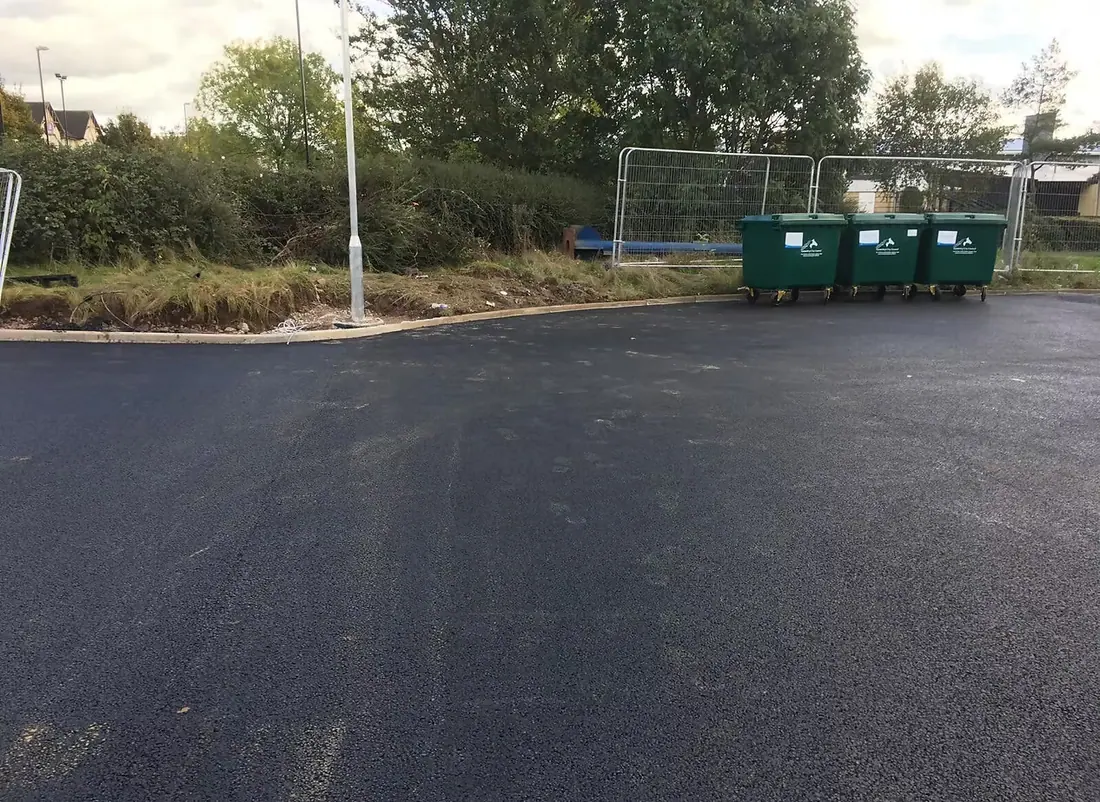
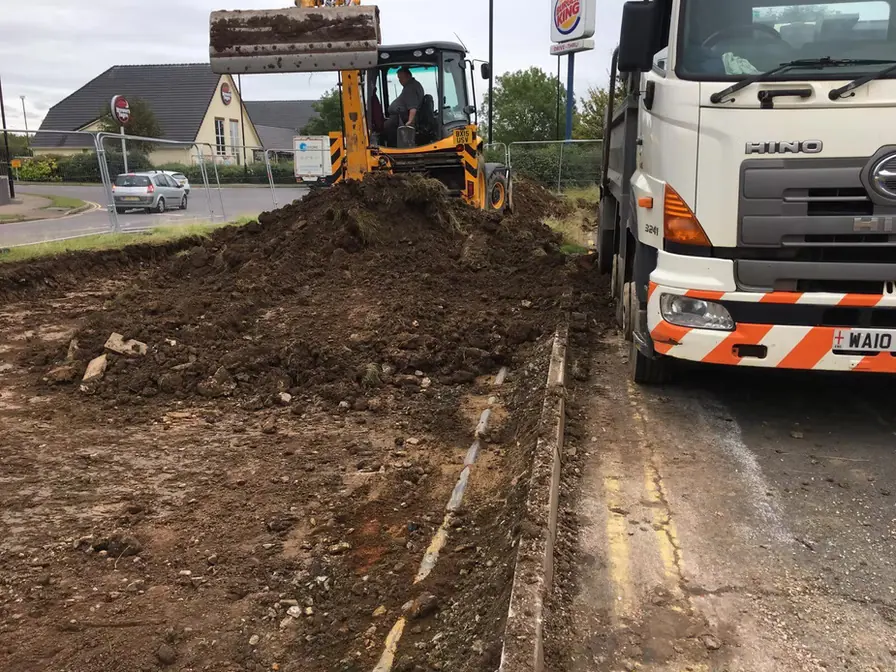
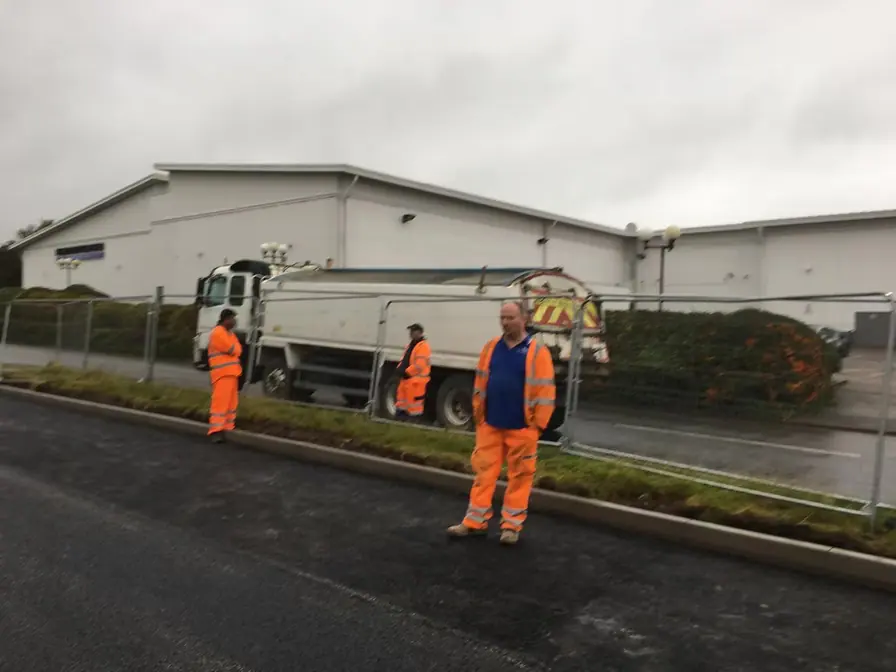
Photos from our own jobs. Tap any image to view it full size.
Why choose us
Why clients trust us with concrete work
Joints planned from the start
Joint positions are set before the pour, so the cracking all concrete does happens along straight lines instead of wandering across your slab.
Concrete and tarmac together
Because we lay both, the edge where a concrete apron meets a tarmac yard is built as one job, with no weak join between contractors.
Ground work comes first
A slab cracks when its support moves, so most of our effort goes into the excavation and compacted sub-base beneath it.
Cleared for site work
Our DBS checked team works under SafeContractor Gold accreditation with £10 million public liability insurance, which makes approval on commercial premises straightforward.
Guaranteed, with experience behind it
All our work is guaranteed, and it comes from a contractor with over 20 years in the surfacing trade across the Midlands.
Ready for a free site survey?
Tell us about the site and we will arrange a visit, measure up and send a clear written quote.

How the job runs
How a concrete job goes
- 1
Step 01
Survey and set out
We measure the area, check ground conditions and agree finished levels, falls and joint positions with you before the quote is written.
- 2
Step 02
Dig and base
The ground is excavated to the required depth and a stone sub-base is laid and compacted, giving the slab even support across its full area.
- 3
Step 03
Form and pour
Formwork and reinforcement go in, then concrete is poured, compacted and finished with a tamped or brushed texture that gives grip underfoot.
- 4
Step 04
Cure and joint
The slab is protected while it cures, joints are cut or formed to control cracking, and the area is handed back once it is ready for loads.
Trusted on site
We have worked on premises for
National commercial brands whose premises our team has worked on. Ask us about the standards we work to on busy, trading sites.



Pricing
What affects the cost of concrete work
Dropped kerbs start from £2,200. Bases, hardstandings and repairs are priced after a free survey, because slab depth and ground conditions vary from site to site.
Get a fixed written quote- 01
Slab depth and reinforcement
A pad for pedestrians needs less depth and steel than a hardstanding for loaded HGVs or plant, and that difference drives the material cost.
- 02
Excavation and spoil
The more ground that has to come out to reach firm formation, the more digging, disposal and sub-base stone goes into the job.
- 03
Access for the pour
Where a mixer can discharge directly the pour is quick. Restricted access may mean pumping or barrowing concrete, which adds time and cost.
- 04
Kerb length and crossings
For kerbs, the length of run, the number of dropped sections and any footway that needs strengthening behind them set the price.
Areas we cover
Concrete across the Midlands
From our base in Bedworth we work throughout the Midlands and take on projects nationwide.
- Birmingham
- Coventry
- Nuneaton
- Rugby
- Solihull
- Wolverhampton
- Walsall
- Dudley
- West Bromwich
- Halesowen
- Stourbridge
- Telford
- Tamworth
- Lichfield
- Cannock
- Hinckley
Reviews
What our customers say
Rated 5 stars on Google and Yell.com, with more reviews from our customers on MyBuilder.


FAQs
Concrete and kerb questions
How much does a dropped kerb cost?
Do I need permission for a dropped kerb?
Should my yard be concrete or tarmac?
Can cracked concrete be repaired rather than replaced?
How long before a new concrete slab can take vehicles?
Can't find the answer you're looking for?
Get a Quick Quote
Get in touch with the team today. We reply quickly, and a site survey and written quote cost you nothing.
Ready to talk about your site? Call 0121 6738596
Free site survey and a written, itemised quote. No obligation.
Explore more