5-star rated on Google
Asphalt Surfacing Contractors
Machine and hand-laid asphalt, built up in the right layers for roads, car parks and yards.
Get Your Quote
Fill out the form below, and our specialists will get back to you swiftly.
 SafeContractorApproved, Gold status
- £10 millionPublic liability
- DBSChecked team
Asphalt Surfacing
Asphalt laid in layers, built for the traffic it carries
An asphalt surface is only as strong as the layers under it. A car park that takes cars can be built quite differently from an industrial yard where loaded HGVs turn on the spot, and choosing the wrong build is the most common reason a new surface ruts or cracks early.
We lay asphalt and macadam for roads, car parks, industrial yards and estate access roads across the Midlands. The job is specified from the ground up: the sub-base, a base course to spread the load, a binder course, and a dense wearing course that takes the traffic and sheds water. You get a written breakdown of each layer and its depth, so you can compare quotes like for like.
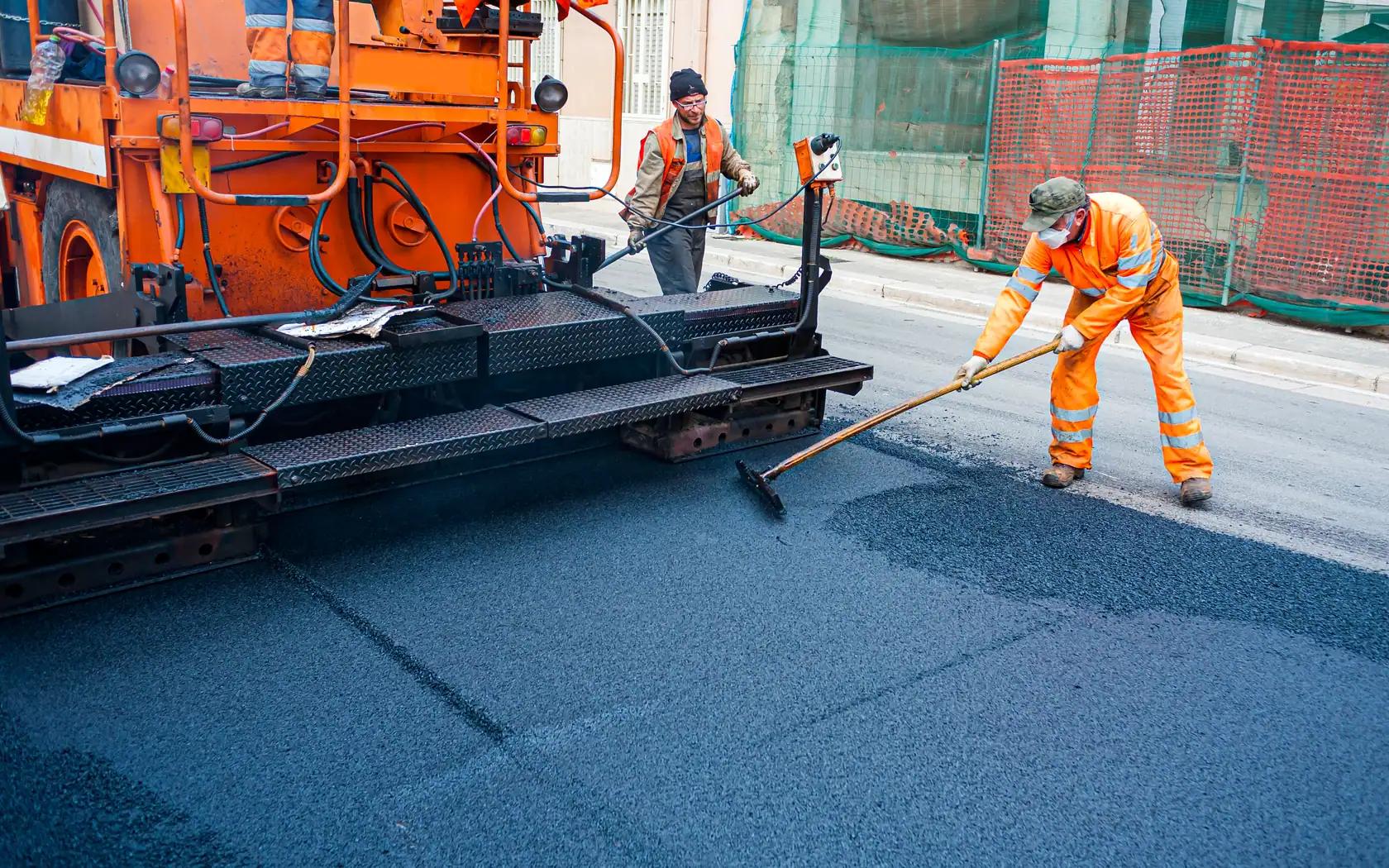
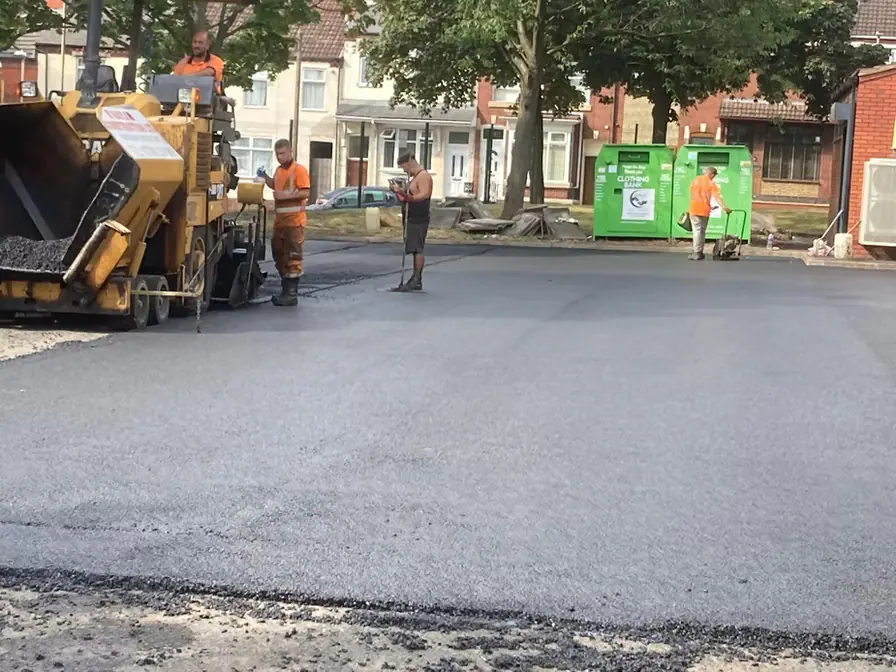
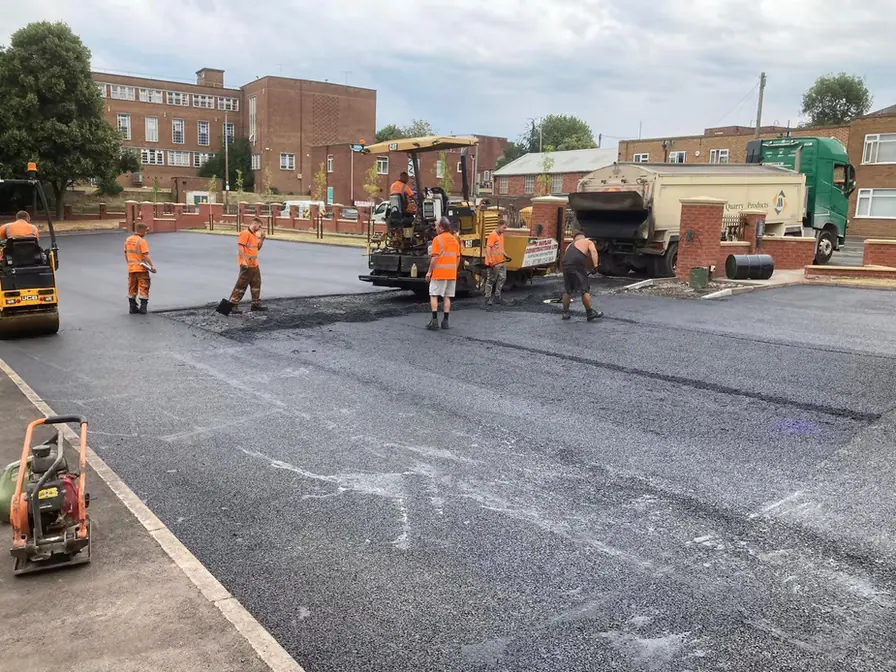
Large open areas are laid by paver for an even depth and a consistent finish. Tight corners, footpaths and areas around ironwork are hand laid and rolled. Most sites need a mix of both, and the survey tells us where each belongs.
- Industrial and distribution yards
- Car parks and service roads
- Private and estate roads
- Loading bays and turning areas
20+
years of surfacing experience
What's included
What an asphalt surfacing job includes
- Excavation and removal of the old surface
- Geotextile membrane where the ground needs it
- Compacted stone sub-base
- Base and binder courses sized to the load
- Dense wearing course to finish
- Machine laying for large open areas
- Hand laying around ironwork and edges
- Kerbs, edgings and drainage falls
- Ironwork raised to the new level
Our work
Explore our asphalt surfacing work
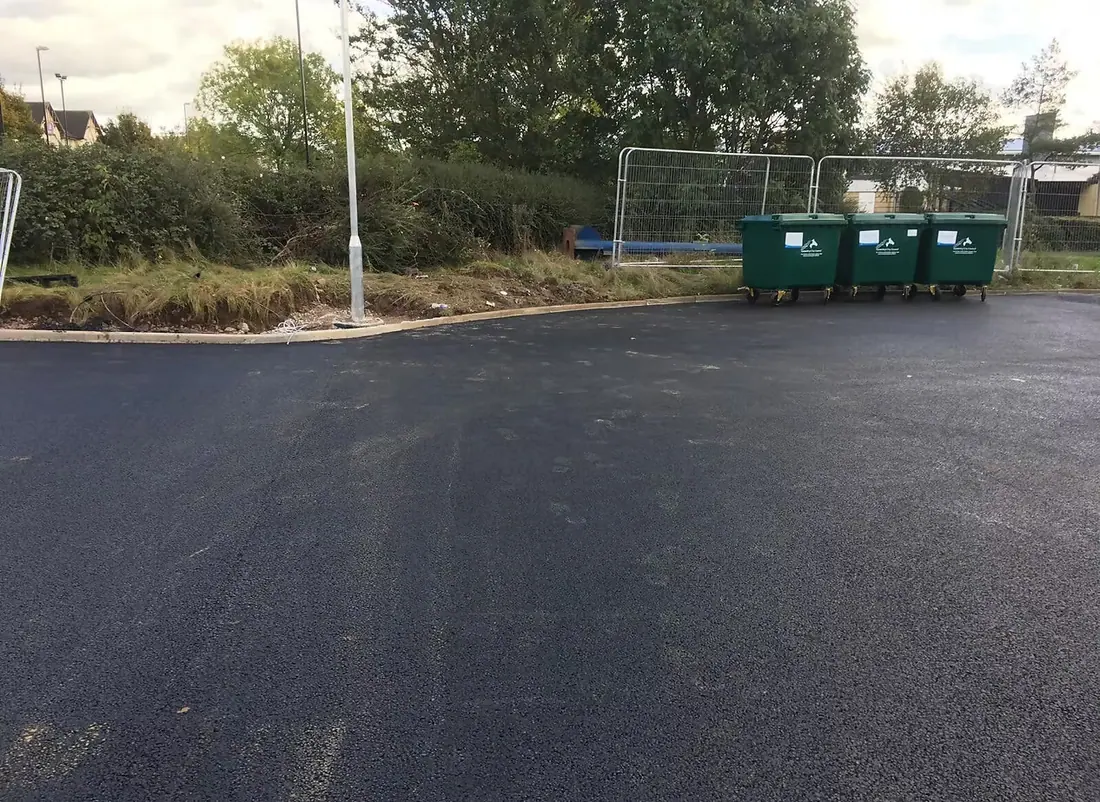
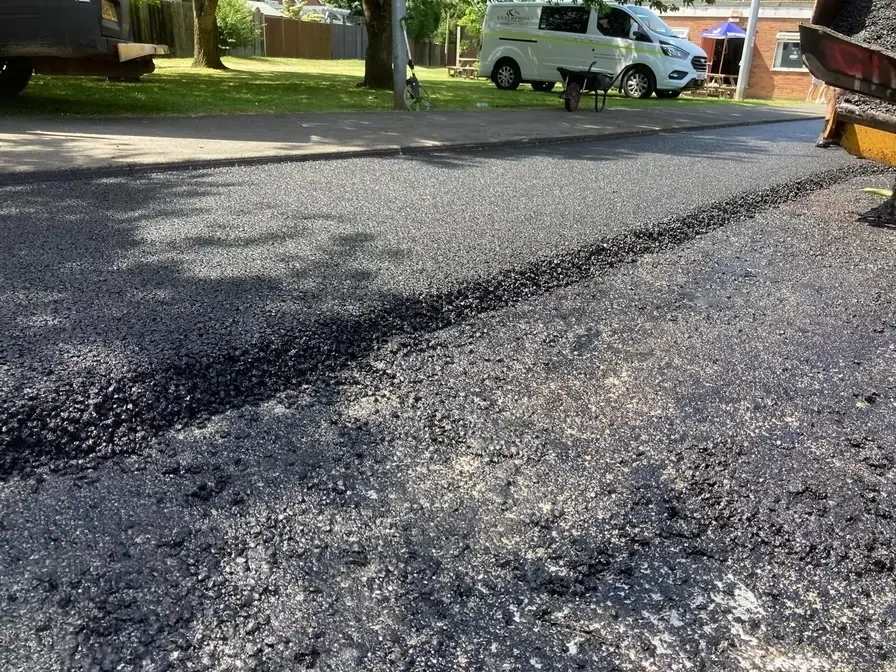
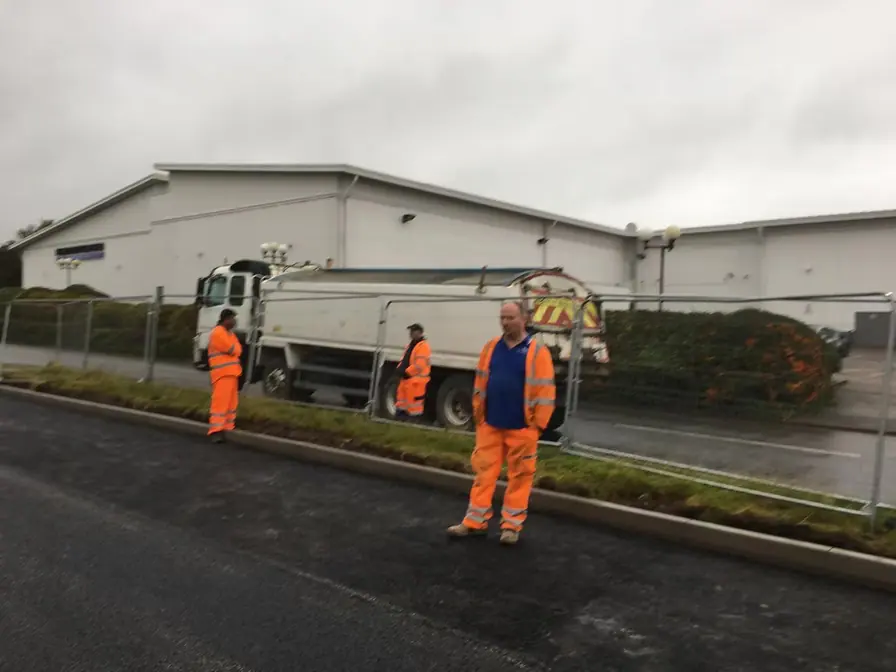
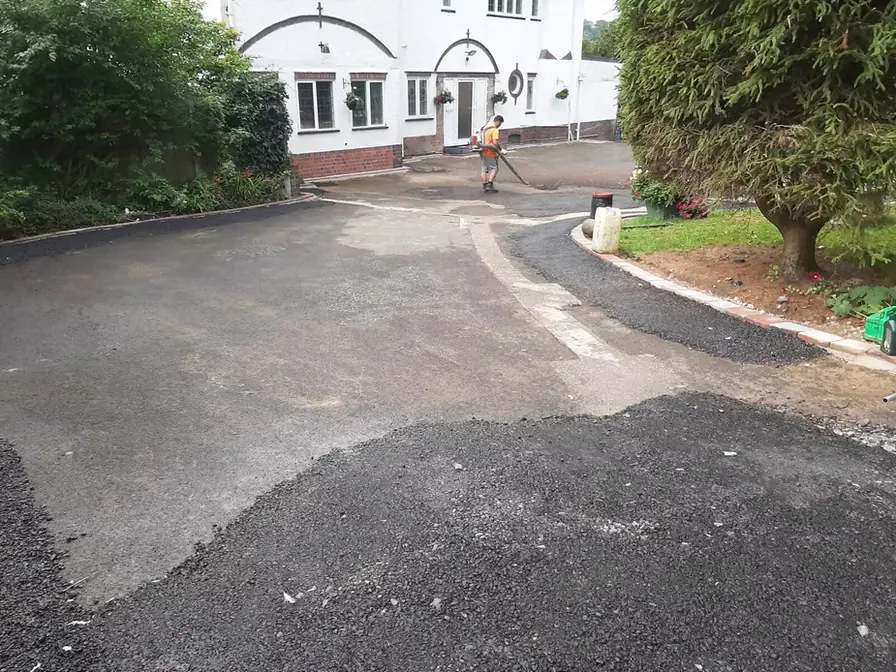
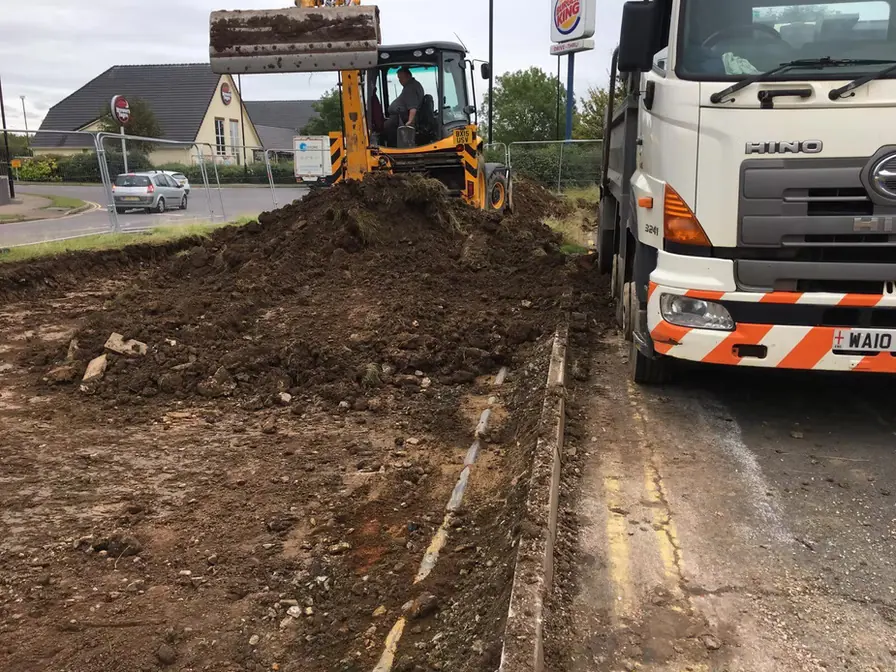
Photos from our own jobs. Tap any image to view it full size.
Why choose us
Why clients bring asphalt projects to us
Specified for your loads
A yard for forklifts and HGVs gets a different build from a staff car park, so you are not paying for depth you do not need.
Paver or hand, as suits
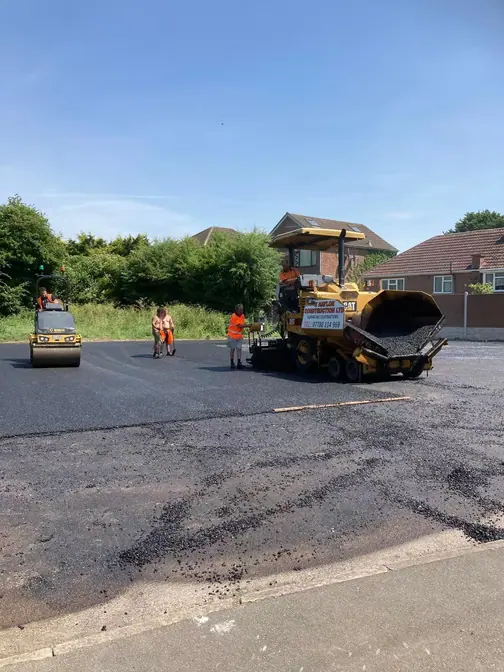
Machine laying where the area allows gives an even finish, while hand laying handles the edges and ironwork a paver cannot reach.
Preparation carries the effort
Most of our time goes into the ground and sub-base, because that is what decides whether new asphalt lasts or starts to rut.
Approved for busy premises
We hold SafeContractor Gold status and £10 million public liability insurance, and our DBS checked team is used to working on live commercial sites.
Two decades of experience
More than 20 years of surfacing, including work at Costa Coffee, KFC and McDonald's premises, with a guarantee on every job we complete.
Ready for a free site survey?
Tell us about the site and we will arrange a visit, measure up and send a clear written quote.

How the job runs
From bare ground to a finished asphalt surface
- 1
Step 01
Survey and specification
We assess ground conditions, traffic type and drainage, then specify the layer build and depths so your quote reflects the loads the surface will really carry.
- 2
Step 02
Excavate and sub-base
The old surface and soft ground come out to formation level. Stone sub-base is then laid in layers and compacted, with falls set to direct water to drainage.
- 3
Step 03
Base and binder
The lower asphalt courses go down next. These spread wheel loads into the sub-base, so their depth is matched to the heaviest vehicles using your site.
- 4
Step 04
Wearing course
The surface course is laid by paver or by hand, rolled while hot for density, and finished at the joints and edges so water stays out.
Trusted on site
We have worked on premises for
National commercial brands whose premises our team has worked on. Ask us about the standards we work to on busy, trading sites.



Pricing
What shapes the price of asphalt surfacing
The layer build is the biggest variable, and it depends on your ground and your traffic. We price it after a free survey, with every layer listed.
Get a fixed written quote- 01
Traffic loading
Heavier vehicles need thicker base and binder courses, which means more material and a deeper excavation than a light-use car park.
- 02
Ground conditions
Clay, made ground or waterlogged areas may need extra excavation, a geotextile membrane or more sub-base before asphalt can go down.
- 03
Laying method
Open areas laid by paver are quicker per square metre than confined areas, which have to be hand laid and rolled in sections.
- 04
Edges, ironwork and drainage
New kerbs, raised manhole covers, gullies and channels all add work, but they also decide how well the surface drains and lasts.
Areas we cover
Asphalt Surfacing across the Midlands
From our base in Bedworth we work throughout the Midlands and take on projects nationwide.
- Birmingham
- Coventry
- Nuneaton
- Rugby
- Solihull
- Wolverhampton
- Walsall
- Dudley
- West Bromwich
- Halesowen
- Stourbridge
- Telford
- Tamworth
- Lichfield
- Cannock
- Hinckley
Reviews
What our customers say
Rated 5 stars on Google and Yell.com, with more reviews from our customers on MyBuilder.


FAQs
Asphalt surfacing questions
What is the difference between asphalt, macadam and tarmac?
Is asphalt suitable for an HGV yard?
Why does a machine-laid finish matter?
How do you stop water pooling on a new surface?
Can you keep part of our yard open during the work?
Can't find the answer you're looking for?
Get a Quick Quote
Get in touch with the team today. We reply quickly, and a site survey and written quote cost you nothing.
Ready to talk about your site? Call 0121 6738596
Free site survey and a written, itemised quote. No obligation.
Explore more